Content warning – the following discusses sexual assault and forced sterilization.
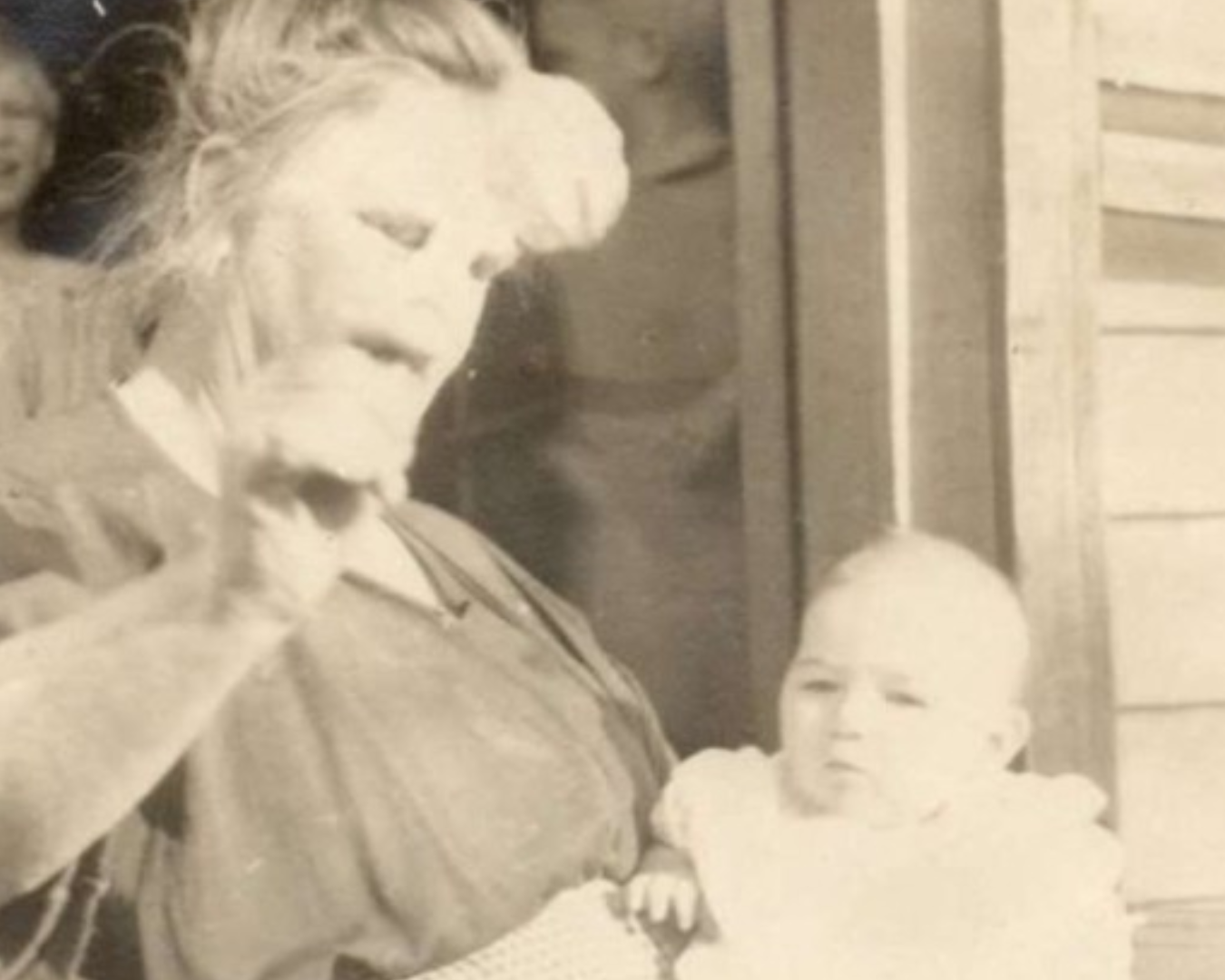
100 years ago, on March 28, 1924, Vivian Buck was born! That should have been a happy day, but for many reasons it wasn’t.
Vivian’s mother, Carrie, was 17 at the time Vivian was born and instead of being supported to be a great mom, powerful people decided to make an example out of her. She was pregnant because she was raped by the nephew of her foster parents. When they learned she was pregnant, her foster parents had her committed to an institution for people labeled “feebleminded” to hide the rape. After giving birth, Carrie was ordered to be forcibly sterilized by the institution’s doctors. With the counter-productive “help” of her assigned attorney who was a proponent of eugenic sterilization and friends with the attorney for the institution that wanted to forcibly sterilize her, Carrie appealed the decision to sterilize her all the way to the United States Supreme Court. The game was fixed with the hospital hand picking her as the test case and assigning an attorney who agreed with the hospital that cleaning the gene pool through forced sterilization was a good thing. The result was Oliver Wendell Holms, arguably the most respected judge in American history, writing the opinion of the highest court in the land in Carrie’s case. In it, he penned one of the most notoriously offensive lines in American jurisprudence:
“We have seen more than once that the public welfare may call upon the best citizens for their lives. It would be strange if it could not call upon those who already sap the strength of the state for these lesser sacrifices…. It is better for all the world, if instead of waiting to execute degenerate offspring for crime, or to let them starve for their imbecility, society can prevent those who are manifestly unfit from continuing their kind. The principle that sustains compulsory vaccination is broad enough to cover cutting the Fallopian tubes. Three generations of imbeciles are enough.”
Vivian was that third generation. Her grandmother, the first generation, was allegedly genetically defective because she was institutionalized at the same facility. What was the proof Vivian’s grandmother was genetically defective, she was accused of being a sex worker. Her mother was supposedly the second generation that was unfit to have children because she was labeled feebleminded and promiscuous for having a child out of wedlock after being raped. And finally, a doctor from the institution that wanted to perform the sterilization thought that at 6 months old, Vivian looked “below average” even though she ultimately went on to attend school and was on the honor role. These three generations of poor, rural, white, women were not genetically and morally defective as claimed. I contend, the morally defective ones were Carrie’s rapist, her foster parents, and of course the privileged, white, male, highly-educated doctors, lawyers, and judges who abused the power they had over this family.
Today eugenic motives are present, albeit often unspoken, in our approach to how we fund services, how we limit the ability of people labeled as disabled to make decisions about their own lives and bodies, how we perpetuate medical systems and social structures that create health disparities for some, and how we deploy child protective services. And, it should be stressed, eugenics is also still present in forced sterilizations and end of decision making practices that happen every day across America. While most people have sanitized their language, right under the surface are thoughts that echo the thoughts of Chief Justice Oliver Wendell Holms that perhaps it’s not such a big deal if we eliminate the people who “sap the strength of the state.”

Content warning – the following discusses sexual assault and forced sterilization.
100 years ago, on March 28, 1924, Vivian Buck was born! That should have been a happy day, but for many reasons it wasn’t.
Vivian’s mother, Carrie, was 17 at the time Vivian was born and instead of being supported to be a great mom, powerful people decided to make an example out of her. She was pregnant because she was raped by the nephew of her foster parents. When they learned she was pregnant, her foster parents had her committed to an institution for people labeled “feebleminded” to hide the rape. After giving birth, Carrie was ordered to be forcibly sterilized by the institution’s doctors. With the counter-productive “help” of her assigned attorney who was a proponent of eugenic sterilization and friends with the attorney for the institution that wanted to forcibly sterilize her, Carrie appealed the decision to sterilize her all the way to the United States Supreme Court. The game was fixed with the hospital hand picking her as the test case and assigning an attorney who agreed with the hospital that cleaning the gene pool through forced sterilization was a good thing. The result was Oliver Wendell Holms, arguably the most respected judge in American history, writing the opinion of the highest court in the land in Carrie’s case. In it, he penned one of the most notoriously offensive lines in American jurisprudence:
Vivian was that third generation. Her grandmother, the first generation, was allegedly genetically defective because she was institutionalized at the same facility. What was the proof Vivian’s grandmother was genetically defective, she was accused of being a sex worker. Her mother was supposedly the second generation that was unfit to have children because she was labeled feebleminded and promiscuous for having a child out of wedlock after being raped. And finally, a doctor from the institution that wanted to perform the sterilization thought that at 6 months old, Vivian looked “below average” even though she ultimately went on to attend school and was on the honor role. These three generations of poor, rural, white, women were not genetically and morally defective as claimed. I contend, the morally defective ones were Carrie’s rapist, her foster parents, and of course the privileged, white, male, highly-educated doctors, lawyers, and judges who abused the power they had over this family.
Today eugenic motives are present, albeit often unspoken, in our approach to how we fund services, how we limit the ability of people labeled as disabled to make decisions about their own lives and bodies, how we perpetuate medical systems and social structures that create health disparities for some, and how we deploy child protective services. And, it should be stressed, eugenics is also still present in forced sterilizations and end of decision making practices that happen every day across America. While most people have sanitized their language, right under the surface are thoughts that echo the thoughts of Chief Justice Oliver Wendell Holms that perhaps it’s not such a big deal if we eliminate the people who “sap the strength of the state.”
Key Staff
Related Posts
DRMT report: The Most Powerful Right press release
Looking for an office cleaning service
HUGE WIN!!!!! Montana’s high schools transformed forever!