Secure Basic Needs of Montanans with Disabilities by
Improving Mental Health Services

Feb 21, 2025

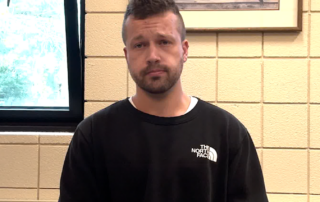
LIVE Press Conference – A.G. Knudsen Underestimates the Disability Community

2025-02-28T09:48:03-07:00February 21st, 2025|

A.G. KNUDSEN MOVES TO ABOLISH SECTION 504, SEND DISABLED MONTANAN’S RIGHTS BACK OVER 50 YEARS
INACCURATE MESSAGES SENT FROM A.G. OFFICE, DISABILITY COMMUNITY WILL SPEAK TRUTH TO POWER

FOR IMMEDIATE RELEASE

Contact: Blake de Pastino, Director of Communications, Summit Independent Living, 406-728-1630, x113, BDePastino@summitilc.org

Helena, MT Leaders from Montana’s disability community will hold a joint press conference regarding the callous actions of Attorney General Austin Knudsen to roll back the civil rights of more than a quarter of Montana residents by his participation in a national lawsuit to abolish Section 504. All press and policy makers are invited to attend.

Where: Disability Rights Montana, 1022 Chestnut Street, Helena, MT 59601
When: Monday, February 24, 2025, 1:00pm

“Section 504 is what gives us a seat at the table, helps us to learn, receive healthcare, and ultimately give back to our communities,” says Opal Besaw, a disabled advocate and author based in Kalispell. “Without Section 504, I would not have received an education.”

Section 504 of the Rehabilitation Act of 1973 is a civil rights law that prohibits discrimination against individuals with disabilities in programs and activities that receive federal financial assistance. Speakers from across Montana advocating for A.G. Knudsen’s withdrawal from this litigation will include:

  • Montana Centers for Independent Living Leadership;
  • The National Federation of the Blind of Montana;
  • Members of the disability community; and
  • Community Service providers.

Scott Birkenbuel, CEO of Ability Montana and a wheelchair user is exasperated at the stance A.G. Knudsen has taken. “Knudsen’s choice to be part of a lawsuit aimed at eliminating protections of Montanans with disabilities shows an unimaginable level of ignorance for thousands of disabled people who call Montana their home.”

In the fall of 2024, Knudsen joined 16 other state attorneys general in a federal lawsuit, Texas v. Becerra. The lawsuit is requesting the court “declare Section 504, 29 U.S.C. § 794, unconstitutional” and “issue permanent injunctive relief against Defendants enjoining them from enforcing Section 504.”

“Section 504 is a landmark civil rights law that has protected disabled Americans from discrimination for more than 50 years,” states Molly Kimmel, Director of the Rural Institute for Inclusive Communities at the University of Montana. At K-12 public schools, at four-year colleges, and at career and technical schools, thousands of Montana students with disabilities receive an education through essential disability-related accommodations that exist because of Section 504. This in turn supports our communities and the future careers of our students.

Jacob Krissovich, Advocacy and Public Policy Chair of the National Federation of the Blind of Montana expresses grave concerns about the aftermath of such a drastic change. “As both a policy professional and a person who is blind, I am shook by this lawsuit. If successful, it will strip fundamental rights from thousands of Montana children and adults in areas of, healthcare, employment, transportation, and community living.”

“Knudsen’s lawsuit carries an alarming message that the government of Montana does not value people with disabilities. The disability community fought hard to get Section 504 and its original implementing regulations passed in the 1970s. I am disappointed by A.G. Knudsen’s cavalier lawsuit which aims at dismissing the welfare and well being of an entire segment of valued Montanans who significantly contribute to the ongoing success of our daily lives” explained Carlos Ramalho, Executive Director of LIFTT and attorney with hearing and vision disabilities. “Montana’s disability community cannot sit by idly and let one man’s misguided campaign tear down decades of progress.”

“Our community’s resistance is already having an effect,” said David Carlson, Executive Director of Disability Rights Montana and attorney with dyslexia. “Montanans have already sent messages to A.G. Knudsen stating their concerns. Responses from his office desperately try to obscure his attack on disabled people as an attack on transgender people. Yesterday, he and his co-counsel filed a document in federal court trying to claim they were only trying to get Section 504 found unconstitutional ‘as applied,’ not ‘on its a face,’ which to me is a distinction without a difference. Especially, when they turn right around and make it clear they are against 504’s efforts to require people with disabilities be integrated in our communities.”

“This lawsuit is about ending Section 504,” States Tami Hoar, Executive Director of Summit Independent Living. “Any other reason given by A.G. Knudsen’s office is either a red herring or a copy/paste response from someone who has not actually read the filed complaint. Attacks to oppress the disability community are not new to us. Our history shows our ability to mobilize, persevere, and prevail. Reverse is not an available gear.”

The press conference will be live streamed. Link will be available at disabilityrightsmt.org day of event. Following the conclusion of the last speaker, interviews will be available one on one with each speaker and other disability advocates. American Sign Language interpretation will be provided. Please contact Kona Franks-Ongoy to request other accommodations, kona@dr-mt.org, 406-449-2344.

Montana Centers for Independent Living are consumer-driven, non-residential, private 501(c)(3) non-profit organizations providing peer-delivered services to give people with all types of disabilities the tools and resources needed to improve independence, self-confidence, knowledge, skills and access to community resources.

### end ###

Feb 7, 2025

Behavioral Health Service System Through the Lens of the Montana State Hospital

2025-02-28T09:48:55-07:00February 7th, 2025|

Jan 22, 2025

Patient Testifies from State-run Psychiatric Institution

2025-01-24T16:27:16-07:00January 22nd, 2025|

Disabled Montanans are often unable to participate in the legislative process for a variety of reasons. This is why we have a presence at the legislature. Though we have staff who are part of the disability community, we are not every voice in our community. We are working to increase the number of disabled voices at the legislature and build a more realistic view of what our community experiences. To the extent we are able, we prefer to hand the microphone to others in our community, and that is what we were able to accomplish in the first hearing of HB 186.

Our staff facilitated testimony of a patient currently at the state-run psychiatric institution (Montana State Hospital) and who is directly impacted by this bill. We are working to center the members of the disability community in the conversation of disability related bills as these individuals will be most impacted by the legislative outcome.

Mike Borgshart, the state hospital patient, was the only opponent for this bill and the only person with a disability to testify.

Jan 14, 2025

Making your Own Choices

2025-01-24T16:27:16-07:00January 14th, 2025|

What:
This community conversation will help People with Disabilities; their families and allies; lawyers, judges, and policy makers; and service providers better understand the myriad decisions each of us make every day, how those decisions are limited by guardianships, and why modern, less-restrictive alternatives offer more responsive, flexible, and person-centered ways to support People with Disabilities who—like everyone else—sometimes need help making important decisions.

When: January 21, 2025 @ 7:00 pm

Where: Disability Rights Montana, 1022 Chestnut St., Helena, MT 59601.  Live stream available.  Call 406-449-2344 or email info@DisabilityRightsMT.org for accommodations.

Who: People with Disabilities; their families and allies; lawyers, judges, policy makers; service providers; and other community members. All are invited.

More About This Session:

Over 50 years ago, Congress enacted the first nationwide protections against disability discrimination, recognizing that People with Disabilities have the right to enjoy self-determination and make their own choices.[i] The right to self-determination and to make one’s own choices is enshrined in the Montana Constitution[ii]  and recognized by International Law. [iii]

Yet, “For more than a century laws have been in place to segregate and isolate people with disabilities . . . enforce[ing] a ‘charity’ model of disability services, removing individual rights and treating adults with disabilities like children to be protected by others . . . .”[iv]  One of the most significant ways this paternalistic  and harmful approach is legally operationalized is through the inappropriate imposition of guardianships, which remove the most essential rights of a Person with a Disability and place them in the hands of a substitute decisionmaker, or “guardian.”

A person under guardianship typically has fewer rights than the typical convicted felon—they can no longer receive money or pay their bills. They cannot marry or divorce. By appointing a guardian, the court entrusts to someone else the power to choose where they will live, what medical treatment they will get and, in rare cases, when they will die. It is, in one short sentence, the most punitive civil penalty that can be levied against an American citizen, with the exception, of course, of the death penalty.[v]

The “school-to-guardianship pipeline” is the phenomenon where parents and guardians of students who receive special education services are encouraged to place their students under guardianship when the student turns 18, often leading to lifelong deprivations of the individuals most basic rights and freedoms.[vi]

We’ll discuss what Montana families, policy makers, and service providers can do to stop the school-to-guardianship pipeline, protect the most fundamental rights of People with Disabilities, and better protect the inherent right of dignity and self-determination that is a hallmark of a free and democratic society.

[i] 29 U.S.C. § 701 (a)(3) (Findings and purposes of the Rehabilitation Act of 1973, which includes that law commonly called “Section 504”); see also 42 U.S.C. §§ 12101(b)(1), et. seq. (The Americans with Disabilities Act, which created “a clear and comprehensive national mandate for the elimination of discrimination against individuals with disabilities.”).

[ii] Mont. Const., Art. II, Sec. 4. (“The dignity of the human being is inviolable.”); see also Baxter v. State, 2009 MT 449, ¶ 64, 354 Mont. 234, 224 P.3d 1211 (Nelson, J., specially concurring) (“[I]ndividual dignity is, in all likelihood, the most important–and yet, in our times, the most fragile– of all human rights protected by Montana’s Constitution.”); and  Armstrong v. State, 1999 MT 261, ¶ 30, 296 Mont. 361, 371-72, 989 P.2d 364, 372-73 (Each individual “has the capacity for and the right of rational self-determination which must be promoted and protected by civil society and political institutions.”) (citing Larry M. Elison and Dennis Nettik Simmons, Right of Privacy, 48 Mont. L. Rev. 1, 17-19 (1987); Jeffrey S. Koehlinger, Substantive Due Process Analysis and the Lockean Liberal Tradition: Rethinking the Modern Privacy Cases, 65 Ind. L.J. 723 (1990)) (explaining John Locke’s conception of “liberty” enshrined in the U.S. Constitution).

[iii] Convention on the Rights of Persons with Disabilities, Art. 3(a), 2515 U.N.T.S. No. 44910 (entered into force May, 2008) (signed, 2009, by the U.S., but not ratified) (Recognizing as a general principle “respect for inherent dignity, individual autonomy including the freedom to make one’s own choices, and independence of persons [including People with Disabilities].”).

[iv] The Americans with Disabilities Act at 25 at 11–12 [hereinafter NDRN Report] (Nat’l Disability Rights Network 2015) (emphasis added), available at https://www.ndrn.org/images/Documents/Resources/Publications/Reports/ADA_at_25_Final.pdf.

[v] Abuses in Guardianship of the Elderly and Infirm: A National Disgrace. A Briefing by the Chairman of the Subcommittee on Health and Long-Term Care of the Select Committee on Aging, 100th Cong. (prepared statement of Chairman Claude Pepper), H.R. Select Comm. on Aging, Subcomm. on Health and Long Term Care, Publ’n No. 100-641 at 4 (Sep. 25, 1987) (emphasis supplied), available at https://files.eric.ed.gov/fulltext/ED297241.pdf.

[vi] Ally Seneczko, Special Education, Guardianships, and Procedural Due Process,  81 Mont. L. Rev. 289, 297–98 (2020) (quotations and citations omitted), available at https://scholarworks.umt.edu/mlr/vol81/iss2/5/.

Documents

Jan 7, 2025

Healthy Communities, Stronger Montana

2025-01-24T16:27:16-07:00January 7th, 2025|

Thousands of Montanans receive healthcare through Medicaid services. Medicaid not only helps keep people healthy, it also creates healthy communities.
Join Disability Rights Montana in a conversation with three panelists as they discus the current state of Medicaid and the different routs and possibilities which could change healthcare in our state for our neighbors, friends, and family.
  • Date: January 14th
  • Time: 7:00 PM
  • Location: 1022 Chestnut Street, Helena, MT 59601

Panelists

Olivia Riutta
Olivia Riutta
Montana Primary Care Associates
Heather O'Loughlin
Heather O'Loughlin
Montana Budget and Policy Center
Joel Rosette
Joel Rosette
Rocky Boy Health Clinic

Oct 23, 2024

Voting Rights at Montana State Hospital

2025-01-24T16:27:16-07:00October 23rd, 2024|

Disability Rights Montana filed a complaint in the Montana Third Judicial District Court, Deer Lodge County, to protect the fundamental voting rights of patients at the Montana State Hospital. This legal action seeks to ensure that patients, many of whom are involuntarily detained for treatment, retain their right to vote in the upcoming election.

Go to Top