

HUGE WIN!!!!! Montana’s high schools transformed forever!
As a result of a lawsuit brought by Disability Rights Montana and its co-counsel on behalf of two Montana students with disabilities, the State of Montana has agreed to a major change in how Montana schools provide special education to students with disabilities, in compliance with federal law, which will now allow eligible students to continue to receive services until age 22. The Judgment filed in the United States District
Court for the District of Montana enforces the rights of eligible students with disabilities under the Individuals with Disabilities Education Act (IDEA), a federal law.
IDEA entitles qualified students with disabilities who need modification of what and how they are taught to a “free appropriate public education (FAPE)” in the “Least Restrictive Environment.” This is accomplished through a detailed planning and implementation process documented in the student’s “Individualized Education Program,” commonly called an “IEP.”
All other states already provide education to students with disabilities beyond age 18 and some provide services up to age 26, if the student has not already earned a “regular high school diploma.” A “regular high school diploma” means a diploma that is fully aligned with state standards for high school graduation and is the diploma that most students earn upon completion of high school. For decades, Montana operated under an exception, cutting off special education services at age 18 for most students. Under an agreed judgment settling the lawsuit, the State of
Montana has agreed to end this practice and allow eligible students to continue in school until they either earn a “regular high school diploma” or turn 22 years old.
“Today is a celebratory day for young adults with disabilities, who seek to thrive in their high school education. Thank you for giving me more time to blossom into the remarkable person I am meant to be.” Said one of the students in the case.
“This is a huge win for Montana students,” said David Carlson, Executive Director of Disability Rights Montana. “Students with disabilities were being exited from school before earning a high school diploma and before they were ready to transition to post-secondary employment, education, and independent living. Now students who need it will have the additional time that federal law allows to prepare for success as adults.”
“This change puts students back in control of their future,” said Tal Goldin, Director of Advocacy and lead attorney for the Plaintiffs in this case.
“We are honored to represent the students who brought this important case and took a brave stand not just for themselves, but for hundreds of others. We are also grateful for the generous efforts of our national co-counsel, Gerald Hartman of The Barbara McDowell Social Justice Center, Jason H. Kim of Schneider Wallace Cottrell Konecky LLP, and James D. Jenkins, who worked tirelessly to achieve this systemic change for Montana’s students with disabilities.”
What This Means:
• Current high school students with disabilities who may need additional time in high school beyond the traditional four years should contact their IEP case manager to arrange an IEP meeting, review their current IEP, and make appropriate adjustments to plan for the additional time now allowed under the Court’s judgment. This is most urgent for students who will be seniors in the 2025-26 school year starting soon, who should request an IEP as soon as possible. “[A] parent can request an additional IEP Team meeting at any time.” 71 Fed. Reg. 46540, 46676 (Aug. 14, 2006).
• Students with disabilities who were exited from high school during the 2024–2025 school year—either for aging out before age 22 or receiving a modified diploma—must be invited back to school to continue until age 22 if they so choose.
• The Montana Office of Public Instruction (OPI) has already issued binding statewide guidance document to schools about how to comply with the Court’s order.
• Two weeks after OPI issues the guidance document, school districts must send notices to students improperly exited from services during the 2024–25 school year informing them of their rights under the Court’s order and providing a form allowing the student to re-enroll.
• Critically, students with disabilities who were improperly exited last school year (2024-25) only have 30 days after receiving the notice from their school to complete and return the re-enrollment paperwork. The reenrollment form is included at the bottom of the Binding Guidance Document.
• Going forward, OPI must also offer ongoing information, training and technical assistance to parents and schools regarding the requirements under the Court’s order; ensure students and families eligible for the additional services receive them; and monitor compliance with Court’s order on an ongoing basis.
Next Steps
DRMT urges families of students with disabilities who exited high school early during the 2024–2025 school year to proactively contact their schools and get the process for reenrollment started as soon as possible. “Once students receive a notice in the mail, they will only have 30 days to reenroll in school,” explained Michelle Weltman, DRMT attorney for the Plaintiffs. “Students eligible for this additional time will also want to ask for an IEP meeting. Being proactive and going to the school is likely the most effective route to ensure no deadlines are missed and the student’s team is prepared to offer appropriate services without delay.”
For help understanding your rights or the re-enrollment process, contact Disability Rights Montana at 406-449-2344 or visit disabilityrightsmt.org. Students and their guardians may also contact the OPI’s Early Assistance Program at 406-444-5664 with any concerns about the Court’s order.
Looking for an office cleaning service
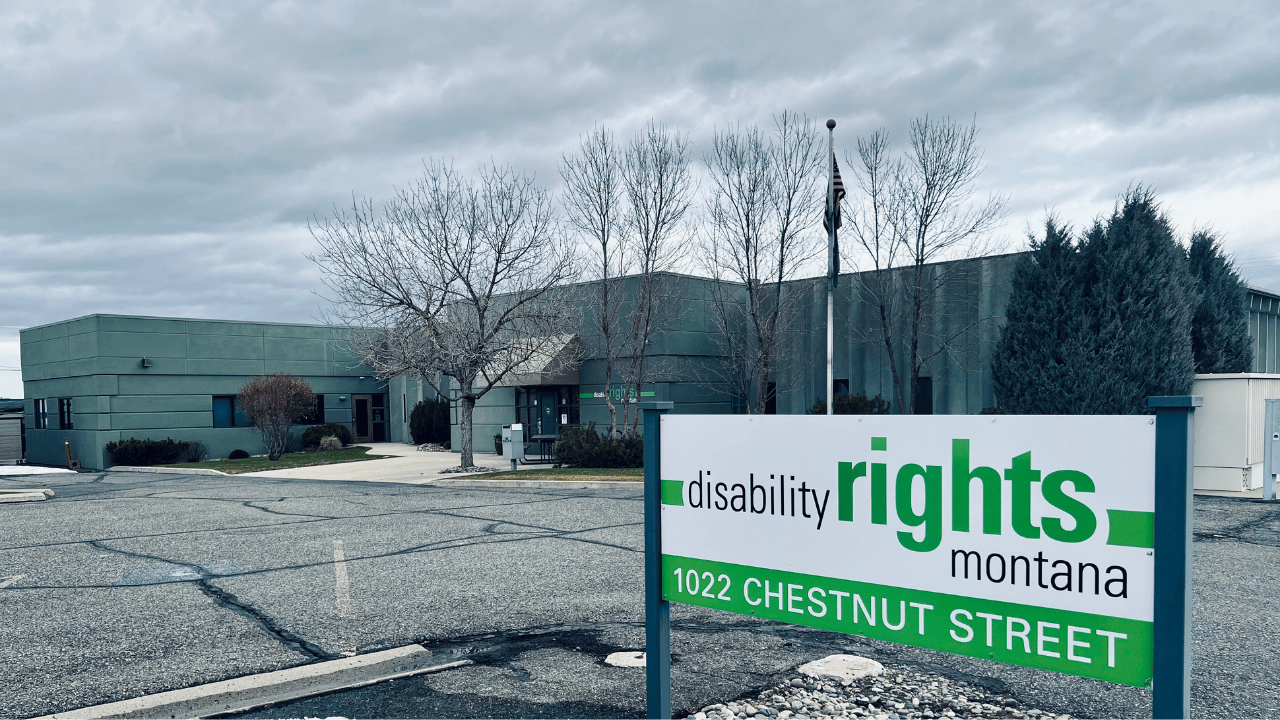
Request for Quote (RFQ): Cleaning Services
Issued by: Disability Rights Montana
Facility Address: 1022 Chestnut Street, Helena, MT 59601
Total Facility Size: 11,700 sq. ft.
Facility Details
– Seventeen (17) offices,
– Two (2) lounges
– Two (2) small conference rooms
– One (1) large conference room
– One (1) kitchen
– Men’s two-stall restroom
– Women’s three-stall restroom
– One (1) unisex ADA-accessible restroom
Scope of Work
Common Areas
Weekly:
- – Empty trash receptacles and replace liners when necessary
- – Vacuum carpet
- – Wipe and clean all furniture surfaces
Monthly:
- – Clean all interior glass of entry and exit doors
- – Clean interior windows in vestibule
- – Clean both sides of interior windows of common areas
Seasonally (usually April through October)
– Clean all exterior glass in exit doors, vestibule and offices
Conference Rooms
Weekly:
- – Wipe and clean all conference room tables
- – Vacuum carpet
Individual Offices
Weekly
- – None
Bathrooms
Weekly
- – Clean toilets and sinks
- – Sweep and mop floors
- – Restock paper products
Kitchen
Weekly
- – Clean sink, counters, and table
- -Wipe and clean interior and exterior of microwave
- -Wipe and clean exterior of refrigerator
- – Sweep and mop floor
- – Empty garbage
Requested Information from Vendor
- – Total monthly cost for services defined above
- – Description of cleaning products used (eco-friendly options preferred but not required)
- – Proof of insurance
- General liability
- Bodily Injury Liability: $500,000 per person and $1,000,000 per occurrence.
- Property Damage Liability: $500,000 per occurrence and $1,000,000 aggregates.
- Worker’s Compensation Coverage: $100,0000, or as required by law.
- – Proposed cleaning schedule (days/times)
- – Any additional fees or optional services
Tour
Before April 3, 2026, a tour of the building can be arranged by sending a request with contact details via email to: accounting@dr-mt.org
Deadline and Submission
Please submit your quote via email to: accounting@dr-mt.org by April 15, 2026
NDRN Welcomes U.S. Supreme Court Decision Protecting Rights of Students with Disabilities
NDRN Welcomes U.S. Supreme Court Decision Protecting Rights of Students with Disabilities
NDRN Welcomes U.S. Supreme Court Decision Protecting Rights of Students with Disabilities
FOR IMMEDIATE RELEASE
Contact: David Card, david.card@ndrn.org
Today, a unanimous U.S. Supreme Court in A.J.T. v. Osseo Public Schools (MN), rejected a more stringent standard for students asserting certain rights under federal disability rights laws.
The Court agreed with the student in the case who argued it was unfair that she and other public school students with disabilities be required to meet a higher level of proof when pursuing certain claims under the Americans with Disabilities Act (ADA). In its ruling, the Court emphasized that nothing in the Individuals with Disabilities Education Act (IDEA), which protects students with disabilities, “ ‘shall be construed to restrict or limit the rights, procedures, and remedies available under’ the ADA, Rehabilitation Act, or other federal laws protecting disabled children’s rights.”
NDRN joined with other disability advocacy groups to support student A.J.T. in an amicus brief arguing that the lower, deliberate indifference standard should apply.
“We applaud this monumental decision that affirms the ADA and Section 504 rights of students and sets a clear and widely recognized standard for pursuing these claims,” said Marlene Sallo, executive director of NDRN. “The Court rightly decided that families should not have to clear a nearly impossible legal hurdle to hold schools accountable for failing to meet their obligations under federal disability law.”
# # #
The National Disability Rights Network (NDRN) is the nonprofit membership organization for the federally mandated Protection and Advocacy (P&A) Systems and the Client Assistance Programs (CAP) for individuals with disabilities. Collectively, the Network is the largest provider of legally based advocacy services to people with disabilities in the United States.

Class Action Filed in Federal Court, Asking Did Not Work
This afternoon, Disability Rights Montana and our national co-counsel team filed a case in federal court against the governor and superintendent of public instruction.
The case is brought on behalf of two named plaintiffs, a class of students (“class” as in class action not school room), and Disability Rights Montana as an association. The case asks the federal court to require schools continue to educate all IDEA eligible students with disabilities who will not graduate at 18 with a regular diploma through the age of 21.
Montana is the last state in the nation that still kicks disabled students out at the end of the school year in which they turn 18. Disability Rights Montana has advocated with policy makers for at least 10 years to change this. Asking the executive and legislative branches of government hasn’t worked, so here we are today asking the judicial branch to get our students the educational services to which they are entitled.
 LIVE Press Conference – A.G. Knudsen Underestimates the Disability Community Gallery
LIVE Press Conference – A.G. Knudsen Underestimates the Disability Community
Accessibility Laws, Court Case, Education Services, Employment, Government Services, Housing, Mental Health Services, News & Commentary, Policy, Press Releases, Supported Decision Making
LIVE Press Conference – A.G. Knudsen Underestimates the Disability Community
A.G. KNUDSEN MOVES TO ABOLISH SECTION 504, SEND DISABLED MONTANAN’S RIGHTS BACK OVER 50 YEARS
INACCURATE MESSAGES SENT FROM A.G. OFFICE, DISABILITY COMMUNITY WILL SPEAK TRUTH TO POWER
INACCURATE MESSAGES SENT FROM A.G. OFFICE, DISABILITY COMMUNITY WILL SPEAK TRUTH TO POWER
FOR IMMEDIATE RELEASE
Contact: Blake de Pastino, Director of Communications, Summit Independent Living, 406-728-1630, x113, BDePastino@summitilc.org
Helena, MT – Leaders from Montana’s disability community will hold a joint press conference regarding the callous actions of Attorney General Austin Knudsen to roll back the civil rights of more than a quarter of Montana residents by his participation in a national lawsuit to abolish Section 504. All press and policy makers are invited to attend.
Where: Disability Rights Montana, 1022 Chestnut Street, Helena, MT 59601
When: Monday, February 24, 2025, 1:00pm
“Section 504 is what gives us a seat at the table, helps us to learn, receive healthcare, and ultimately give back to our communities,” says Opal Besaw, a disabled advocate and author based in Kalispell. “Without Section 504, I would not have received an education.”
Section 504 of the Rehabilitation Act of 1973 is a civil rights law that prohibits discrimination against individuals with disabilities in programs and activities that receive federal financial assistance. Speakers from across Montana advocating for A.G. Knudsen’s withdrawal from this litigation will include:
- Montana Centers for Independent Living Leadership;
- The National Federation of the Blind of Montana;
- Members of the disability community; and
- Community Service providers.
Scott Birkenbuel, CEO of Ability Montana and a wheelchair user is exasperated at the stance A.G. Knudsen has taken. “Knudsen’s choice to be part of a lawsuit aimed at eliminating protections of Montanans with disabilities shows an unimaginable level of ignorance for thousands of disabled people who call Montana their home.”
In the fall of 2024, Knudsen joined 16 other state attorneys general in a federal lawsuit, Texas v. Becerra. The lawsuit is requesting the court “declare Section 504, 29 U.S.C. § 794, unconstitutional” and “issue permanent injunctive relief against Defendants enjoining them from enforcing Section 504.”
“Section 504 is a landmark civil rights law that has protected disabled Americans from discrimination for more than 50 years,” states Molly Kimmel, Director of the Rural Institute for Inclusive Communities at the University of Montana. “At K-12 public schools, at four-year colleges, and at career and technical schools, thousands of Montana students with disabilities receive an education through essential disability-related accommodations that exist because of Section 504. This in turn supports our communities and the future careers of our students.”
Jacob Krissovich, Advocacy and Public Policy Chair of the National Federation of the Blind of Montana expresses grave concerns about the aftermath of such a drastic change. “As both a policy professional and a person who is blind, I am shook by this lawsuit. If successful, it will strip fundamental rights from thousands of Montana children and adults in areas of, healthcare, employment, transportation, and community living.”
“Knudsen’s lawsuit carries an alarming message that the government of Montana does not value people with disabilities. The disability community fought hard to get Section 504 and its original implementing regulations passed in the 1970s. I am disappointed by A.G. Knudsen’s cavalier lawsuit which aims at dismissing the welfare and well being of an entire segment of valued Montanans who significantly contribute to the ongoing success of our daily lives” explained Carlos Ramalho, Executive Director of LIFTT and attorney with hearing and vision disabilities. “Montana’s disability community cannot sit by idly and let one man’s misguided campaign tear down decades of progress.”
“Our community’s resistance is already having an effect,” said David Carlson, Executive Director of Disability Rights Montana and attorney with dyslexia. “Montanans have already sent messages to A.G. Knudsen stating their concerns. Responses from his office desperately try to obscure his attack on disabled people as an attack on transgender people. Yesterday, he and his co-counsel filed a document in federal court trying to claim they were only trying to get Section 504 found unconstitutional ‘as applied,’ not ‘on its a face,’ which to me is a distinction without a difference. Especially, when they turn right around and make it clear they are against 504’s efforts to require people with disabilities be integrated in our communities.”
“This lawsuit is about ending Section 504,” States Tami Hoar, Executive Director of Summit Independent Living. “Any other reason given by A.G. Knudsen’s office is either a red herring or a copy/paste response from someone who has not actually read the filed complaint. Attacks to oppress the disability community are not new to us. Our history shows our ability to mobilize, persevere, and prevail. Reverse is not an available gear.”
The press conference will be live streamed. Link will be available at disabilityrightsmt.org day of event. Following the conclusion of the last speaker, interviews will be available one on one with each speaker and other disability advocates. American Sign Language interpretation will be provided. Please contact Kona Franks-Ongoy to request other accommodations, kona@dr-mt.org, 406-449-2344.
Montana Centers for Independent Living are consumer-driven, non-residential, private 501(c)(3) non-profit organizations providing peer-delivered services to give people with all types of disabilities the tools and resources needed to improve independence, self-confidence, knowledge, skills and access to community resources.
### end ###
Court Documents
Disability Perspective

Physical Accessibility Issues with State and Local Government
Have you faced accessibility challenges in Montana’s state or local government buildings? Whether it’s a city or county building, the DMV, the Capitol, or any other local/state government space, we want to hear about your experiences. Your input will help us understand where we should focus our efforts to make these physical spaces available to all Montana Residents
Your perspective can make a difference—let’s work together for a more accessible future!
If you are unable to fill out the form, call our office and let us know what local or state government building has an accessibility issue.