

Behavioral Health Service System Through the Lens of the Montana State Hospital
Presenter: Mike Lahr, Staff Attorney

Patient Testifies from State-run Psychiatric Institution
Disabled Montanans are often unable to participate in the legislative process for a variety of reasons. This is why we have a presence at the legislature. Though we have staff who are part of the disability community, we are not every voice in our community. We are working to increase the number of disabled voices at the legislature and build a more realistic view of what our community experiences. To the extent we are able, we prefer to hand the microphone to others in our community, and that is what we were able to accomplish in the first hearing of HB 186.
Our staff facilitated testimony of a patient currently at the state-run psychiatric institution (Montana State Hospital) and who is directly impacted by this bill. We are working to center the members of the disability community in the conversation of disability related bills as these individuals will be most impacted by the legislative outcome.
Mike Borgshart, the state hospital patient, was the only opponent for this bill and the only person with a disability to testify.
Eugenics and America’s moral policing of women, sex, and disabled bodies and minds
Content warning – the following discusses sexual assault and forced sterilization.
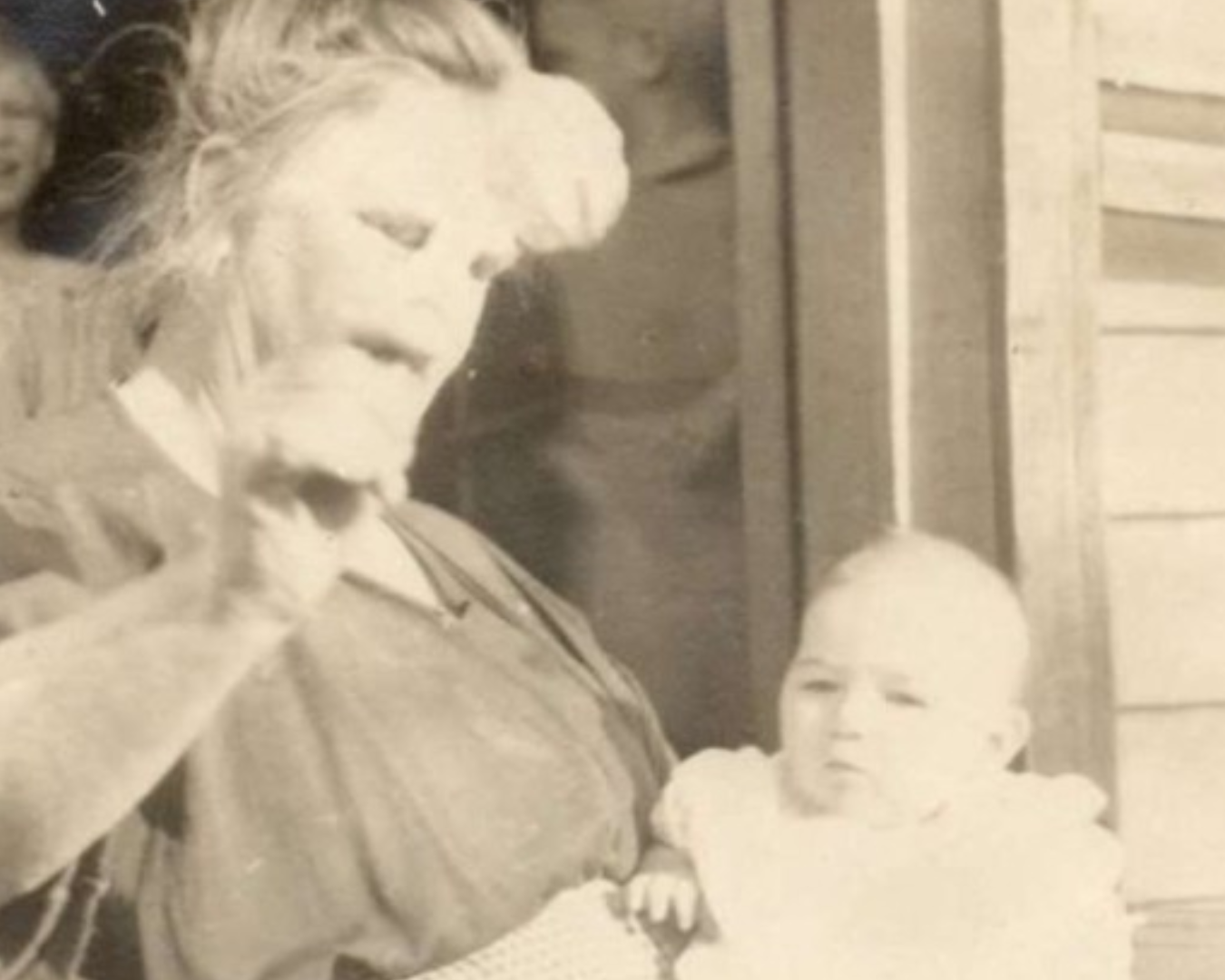
100 years ago, on March 28, 1924, Vivian Buck was born! That should have been a happy day, but for many reasons it wasn’t.
Vivian’s mother, Carrie, was 17 at the time Vivian was born and instead of being supported to be a great mom, powerful people decided to make an example out of her. She was pregnant because she was raped by the nephew of her foster parents. When they learned she was pregnant, her foster parents had her committed to an institution for people labeled “feebleminded” to hide the rape. After giving birth, Carrie was ordered to be forcibly sterilized by the institution’s doctors. With the counter-productive “help” of her assigned attorney who was a proponent of eugenic sterilization and friends with the attorney for the institution that wanted to forcibly sterilize her, Carrie appealed the decision to sterilize her all the way to the United States Supreme Court. The game was fixed with the hospital hand picking her as the test case and assigning an attorney who agreed with the hospital that cleaning the gene pool through forced sterilization was a good thing. The result was Oliver Wendell Holms, arguably the most respected judge in American history, writing the opinion of the highest court in the land in Carrie’s case. In it, he penned one of the most notoriously offensive lines in American jurisprudence:
“We have seen more than once that the public welfare may call upon the best citizens for their lives. It would be strange if it could not call upon those who already sap the strength of the state for these lesser sacrifices…. It is better for all the world, if instead of waiting to execute degenerate offspring for crime, or to let them starve for their imbecility, society can prevent those who are manifestly unfit from continuing their kind. The principle that sustains compulsory vaccination is broad enough to cover cutting the Fallopian tubes. Three generations of imbeciles are enough.”
Vivian was that third generation. Her grandmother, the first generation, was allegedly genetically defective because she was institutionalized at the same facility. What was the proof Vivian’s grandmother was genetically defective, she was accused of being a sex worker. Her mother was supposedly the second generation that was unfit to have children because she was labeled feebleminded and promiscuous for having a child out of wedlock after being raped. And finally, a doctor from the institution that wanted to perform the sterilization thought that at 6 months old, Vivian looked “below average” even though she ultimately went on to attend school and was on the honor role. These three generations of poor, rural, white, women were not genetically and morally defective as claimed. I contend, the morally defective ones were Carrie’s rapist, her foster parents, and of course the privileged, white, male, highly-educated doctors, lawyers, and judges who abused the power they had over this family.
Today eugenic motives are present, albeit often unspoken, in our approach to how we fund services, how we limit the ability of people labeled as disabled to make decisions about their own lives and bodies, how we perpetuate medical systems and social structures that create health disparities for some, and how we deploy child protective services. And, it should be stressed, eugenics is also still present in forced sterilizations and end of decision making practices that happen every day across America. While most people have sanitized their language, right under the surface are thoughts that echo the thoughts of Chief Justice Oliver Wendell Holms that perhaps it’s not such a big deal if we eliminate the people who “sap the strength of the state.”
Making your Own Choices
What:
This community conversation will help People with Disabilities; their families and allies; lawyers, judges, and policy makers; and service providers better understand the myriad decisions each of us make every day, how those decisions are limited by guardianships, and why modern, less-restrictive alternatives offer more responsive, flexible, and person-centered ways to support People with Disabilities who—like everyone else—sometimes need help making important decisions.
When: January 21, 2025 @ 7:00 pm
Where: Disability Rights Montana, 1022 Chestnut St., Helena, MT 59601. Live stream available. Call 406-449-2344 or email info@DisabilityRightsMT.org for accommodations.
Who: People with Disabilities; their families and allies; lawyers, judges, policy makers; service providers; and other community members. All are invited.
More About This Session:
Over 50 years ago, Congress enacted the first nationwide protections against disability discrimination, recognizing that People with Disabilities have the right to enjoy self-determination and make their own choices.[i] The right to self-determination and to make one’s own choices is enshrined in the Montana Constitution[ii] and recognized by International Law. [iii]
Yet, “For more than a century laws have been in place to segregate and isolate people with disabilities . . . enforce[ing] a ‘charity’ model of disability services, removing individual rights and treating adults with disabilities like children to be protected by others . . . .”[iv] One of the most significant ways this paternalistic and harmful approach is legally operationalized is through the inappropriate imposition of guardianships, which remove the most essential rights of a Person with a Disability and place them in the hands of a substitute decisionmaker, or “guardian.”
A person under guardianship typically has fewer rights than the typical convicted felon—they can no longer receive money or pay their bills. They cannot marry or divorce. By appointing a guardian, the court entrusts to someone else the power to choose where they will live, what medical treatment they will get and, in rare cases, when they will die. It is, in one short sentence, the most punitive civil penalty that can be levied against an American citizen, with the exception, of course, of the death penalty.[v]
The “school-to-guardianship pipeline” is the phenomenon where parents and guardians of students who receive special education services are encouraged to place their students under guardianship when the student turns 18, often leading to lifelong deprivations of the individuals most basic rights and freedoms.[vi]
We’ll discuss what Montana families, policy makers, and service providers can do to stop the school-to-guardianship pipeline, protect the most fundamental rights of People with Disabilities, and better protect the inherent right of dignity and self-determination that is a hallmark of a free and democratic society.
[i] 29 U.S.C. § 701 (a)(3) (Findings and purposes of the Rehabilitation Act of 1973, which includes that law commonly called “Section 504”); see also 42 U.S.C. §§ 12101(b)(1), et. seq. (The Americans with Disabilities Act, which created “a clear and comprehensive national mandate for the elimination of discrimination against individuals with disabilities.”).
[ii] Mont. Const., Art. II, Sec. 4. (“The dignity of the human being is inviolable.”); see also Baxter v. State, 2009 MT 449, ¶ 64, 354 Mont. 234, 224 P.3d 1211 (Nelson, J., specially concurring) (“[I]ndividual dignity is, in all likelihood, the most important–and yet, in our times, the most fragile– of all human rights protected by Montana’s Constitution.”); and Armstrong v. State, 1999 MT 261, ¶ 30, 296 Mont. 361, 371-72, 989 P.2d 364, 372-73 (Each individual “has the capacity for and the right of rational self-determination which must be promoted and protected by civil society and political institutions.”) (citing Larry M. Elison and Dennis Nettik Simmons, Right of Privacy, 48 Mont. L. Rev. 1, 17-19 (1987); Jeffrey S. Koehlinger, Substantive Due Process Analysis and the Lockean Liberal Tradition: Rethinking the Modern Privacy Cases, 65 Ind. L.J. 723 (1990)) (explaining John Locke’s conception of “liberty” enshrined in the U.S. Constitution).
[iii] Convention on the Rights of Persons with Disabilities, Art. 3(a), 2515 U.N.T.S. No. 44910 (entered into force May, 2008) (signed, 2009, by the U.S., but not ratified) (Recognizing as a general principle “respect for inherent dignity, individual autonomy including the freedom to make one’s own choices, and independence of persons [including People with Disabilities].”).
[iv] The Americans with Disabilities Act at 25 at 11–12 [hereinafter NDRN Report] (Nat’l Disability Rights Network 2015) (emphasis added), available at https://www.ndrn.org/images/Documents/Resources/Publications/Reports/ADA_at_25_Final.pdf.
[v] Abuses in Guardianship of the Elderly and Infirm: A National Disgrace. A Briefing by the Chairman of the Subcommittee on Health and Long-Term Care of the Select Committee on Aging, 100th Cong. (prepared statement of Chairman Claude Pepper), H.R. Select Comm. on Aging, Subcomm. on Health and Long Term Care, Publ’n No. 100-641 at 4 (Sep. 25, 1987) (emphasis supplied), available at https://files.eric.ed.gov/fulltext/ED297241.pdf.
[vi] Ally Seneczko, Special Education, Guardianships, and Procedural Due Process, 81 Mont. L. Rev. 289, 297–98 (2020) (quotations and citations omitted), available at https://scholarworks.umt.edu/mlr/vol81/iss2/5/.
Documents
Healthy Communities, Stronger Montana
- Date: January 14th
- Time: 7:00 PM
- Location: 1022 Chestnut Street, Helena, MT 59601
Panelists




Voting Rights at Montana State Hospital
Disability Rights Montana filed a complaint in the Montana Third Judicial District Court, Deer Lodge County, to protect the fundamental voting rights of patients at the Montana State Hospital. This legal action seeks to ensure that patients, many of whom are involuntarily detained for treatment, retain their right to vote in the upcoming election.